
HOPE DEVOTIONAL

“Seeing isn’t believing, believing is seeing. Kids don’t have to see this place to know it’s here. They just… know.” – The Santa Clause
I was 10 when the 1994 Christmas movie, The Santa Clause, came out, and it had everything my young heart needed - humor, love, adventure, wonder, and the magic of Christmas. It found a special place in my heart, and it continues to be my favorite Christmas movie. I especially love the first part of the movie, when Scott Calvin unexpectedly (and begrudgingly) steps into the role of Santa and, with his son Charlie, spends the night delivering gifts. After delivering all the presents, they end up at the workshop at the North Pole. There, Charlie is wide-eyed with wonder, while Scott is convinced he is hallucinating or in some sort of “fever dream”. He looks out the window taking in the view of the city of the North Pole and as he tries to process what he is seeing, he says, “I see it, but I don’t believe it.” And the lovely elf he’s talking to, Judy, says, “You’re missing the point. Seeing isn’t believing, believing is seeing. Kids don’t have to see this place to know it’s here. They just… know.”
I tear up almost every time I hear this line. As a child, I felt it deep in my heart—not as blind trust in Santa, but as a recognition of the way children can believe in magic and wonder at Christmas (and always). As an adult, this moment resonates with me in an even deeper way. It reminds me that true faith begins with believing. Charlie doesn’t question; he simply delights in the magic of what is before him. Scott resists, trying to reason it away. In this moment, we see two very different ways of approaching mystery and wonder - one that demands proof, and one that trusts enough simply to enjoy it.
Today, we begin the season of Advent, a sacred season of waiting. We are between what has already happened and what is yet to come. God invites us to begin this season with hope - a deep intrinsic hope that asks us to trust even when we don’t have it all laid out and visible before us. This deep hope means daring to believe first—that peace, joy, and love will come—so that we can notice glimpses of it around us and within us.
Children don’t need proof to trust. We see it in the movie, and it echoes Jesus’ words about having faith like a child. In my work with children and youth, I have seen this powerful Advent truth - children and young people often remind us that hope doesn’t require evidence, just openness. Children’s wonder and trust invite adults to reclaim this way of seeing the world.
As a child watching The Santa Clause, there was another piece of the story that resonated deeply with me. Charlie’s parents are divorced, as were mine. Beyond the magic and humor of the story, there was something healing about watching the way Scott slowly gains a better connection with his son, and the way Charlie’s parents rebuild trust in each other after contentious times. I felt seen in that. Children do carry heavy burdens, often ones far too big for their small shoulders. And yet, like Charlie, they also carry an incredible capacity for hope. They can hold a vision of a world that comes together even before the adults around them are ready. As a child, that gave me strength; as an adult, it serves as a poignant reminder that children often lead the way in holding onto hope when the world feels fractured.
One of the hidden gems in The Santa Clause is easy to miss unless you know to watch for it: elves from the North Pole quietly appear throughout the movie, dressed in ordinary clothes, blending in among children or in the background. They aren’t flashy or obvious, but they are there, checking in, making sure all is well for Scott and Charlie. I love this subtle detail because it echoes the way God so often shows up in our own lives: quietly, unexpectedly, walking with us in ways we might not even notice at first. It’s a gentle reminder that we are never alone.
The story of Jesus’ birth reminds us that God’s hope for the world came in the most unlikely of places. On an ordinary night, in a stranger’s stable, a child was born to a refugee family. This is the reminder of what God’s hope can look like—arriving quietly, vulnerably, and where few expect it. It calls us to open our eyes to the unexpected places where God is still breaking in: in the overlooked corners, in the lives of those the world disregards, and in the ordinary moments of our own days. Hope is not confined to grand gestures or perfect circumstances; it is found right in the middle of our messy, fragile, beautiful world.
Our world is weary right now. Division, fear, unknowns, safety concerns, injustice, uncertainty, and hate often flood the headlines on our newsfeeds. This world asks so much of us right now - so much resilience, so much effort, so much everything. It can be hard to hope. It can be hard to hold onto believing when all we see seems to contradict God’s message of love and peace. You may be feeling overwhelmed, tired, and weary. Advent is a season of waiting, and in many ways our lives reflect that same longing. Waiting for peace, for comfort, for connection. I think now more than ever is the time to dig deep to hold to what we know to be true - that God is with us and at work in our lives. When we choose to hold onto that belief, it allows us to keep moving forward and to see traces of God in the ordinary.
In this Advent time (and always) God invites us into a faith that requires, somehow, both a letting go and a holding on. We let go of what the world tells us we need—proof, control, certainty, production—and we hold fast to God’s invitation: to choose hope, to seek peace, to embrace joy, and to love deeply. It is imperative for our own well-being, and it will, in turn, help those around us and our world. This kind of faith requires trusting that even when we don’t know what the future holds, God is with us, and goodness is on the way.
What I am finding for myself, as I live more into the Advent story, is that this season of waiting is not passive. It calls something out of us, inviting us to participate, rather than simply watch and wait. Hope is an action, and we are being called to choose hope. So let us return to the childlike wonder that opens our hearts to God’s presence. Let us hold fast to a childlike faith that dares to believe first, so that we may see God’s hope, peace, joy, and love shining in our hearts and the world around us.
Closing Prayer: HOPE
God of mystery and promise,
in this season of waiting, we bring you our weary hearts and our longing souls.
Teach us again to believe before we see.
Give us the courage of children—
to trust without proof,
to hope when the world feels heavy,
to wonder at the glimpses of your presence all around us.
Help us let go of fear and control,
and hold fast to your gifts of hope, peace, joy, and love.
As we journey through Advent,
open our eyes to see you in the everyday,
and open our hearts to carry your light into the world.
Amen.
Reflection Questions:
What does hope look like for you in this season of Advent?
How does “believing before seeing” change the way you understand hope?
What hopeful action do you want to engage in this Advent season?
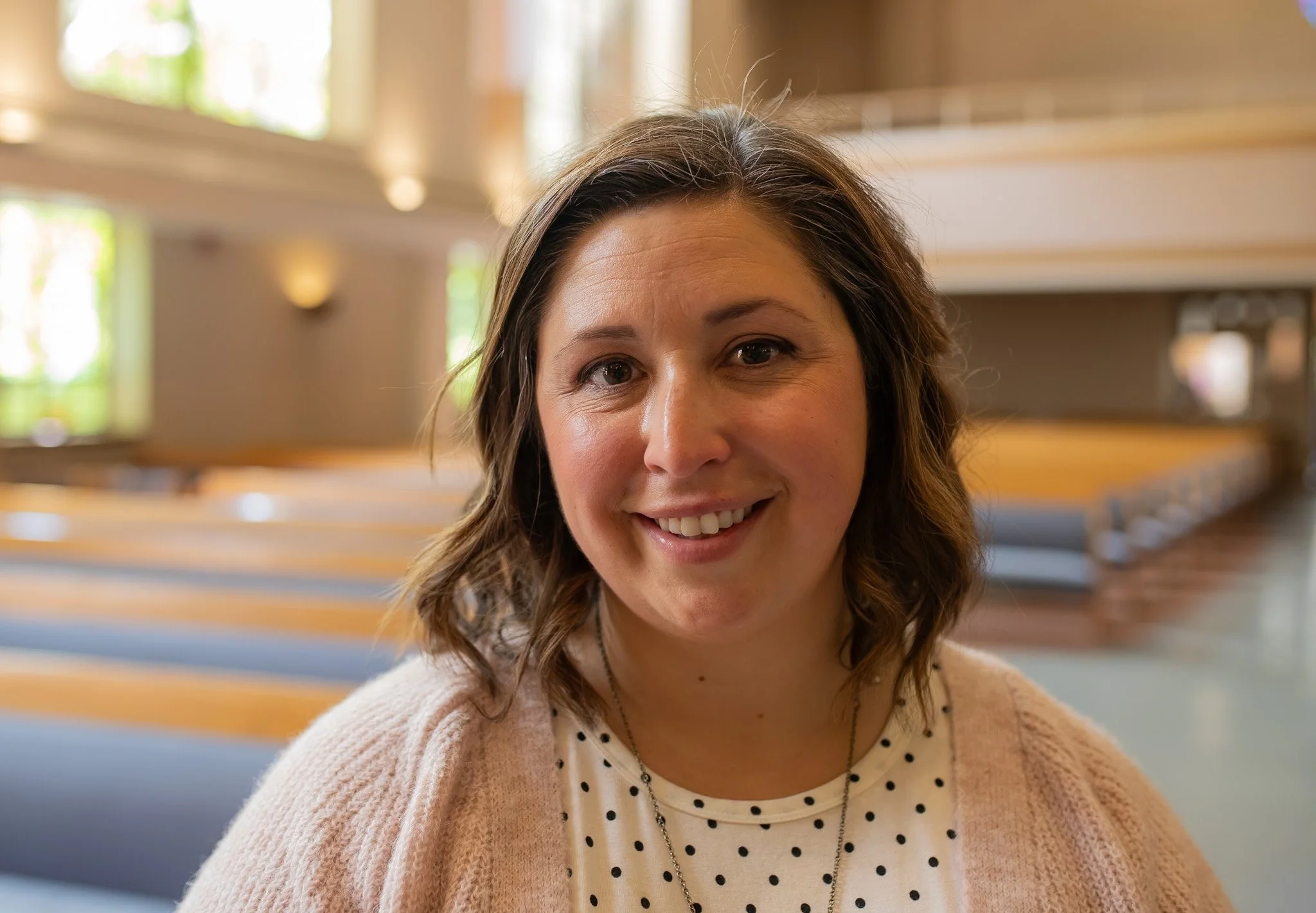
Margaret Irribarra Swanson
Margaret Irribarra Swanson is the Director of Children, Youth, and Family Ministries at University Congregational United Church of Christ in Seattle, Washington, where she has served for more than 19 years. A (mostly) lifelong Pacific Northwesterner, she lives just north of Seattle with her husband and their three children, finding joy in the beauty of the mountains, ocean, and even the grey skies. Margaret is proud of her Latina heritage as a biracial woman and daughter of a refugee, and she comes from a long line of UCC ministers, grounding her in a progressive Christian faith she continues to celebrate and share.
In addition to her ministry within her congregation, Margaret has served in volunteer leadership roles at the local, regional, and national levels of the United Church of Christ. She is passionate about nurturing progressive faith formation for young people and families, and she delights in creating spaces of wonder, belonging, and connection. Beyond ministry, she loves singing, making art, going on adventures, laughing with friends, and savoring the sacredness of everyday life.