
Holy Saturday: Faith in the Pause
Matthew 27:57–66
—
Holy Saturday is the day faith speaks softly.
The work has been done.
The loss has already occurred.
The promise has not yet revealed itself.
This is the day between declaration and fulfillment, between what has ended and what has not yet begun. In Matthew’s Gospel, Holy Saturday is marked not by movement, but by containment. Jesus’ body is taken down from the cross, wrapped gently, and placed in a tomb carved from stone. A heavy seal is set. Guards are posted. The story appears closed.
And yet—this pause is not absence.
It is presence without performance.
Holy Saturday invites us into a kind of faith that does not rush toward answers. A faith that trusts what cannot yet be seen. A faith willing to stay with the promise of resurrection even when nothing seems to be happening.
The Body After the Cross
The crucifixion has already exhausted the body. There is no more striving, no more speech, no more resistance. What remains is stillness—not chosen, but necessary.
We often understand faith as endurance: keep moving, keep believing, keep pushing forward. But Holy Saturday offers a different definition. Faith here is not momentum; it is pause.
It is the moment when the nervous system has been overwhelmed and must settle before it can reorganize. The moment when the body says, enough. The moment when silence becomes the most honest prayer.
Holy Saturday asks:
Can you trust God when your body is no longer productive?
Can you trust the sacred when nothing is resolving?
This is faith stripped of spectacle.
The Tomb as Sacred Pause
Matthew tells us the tomb is new. It has not yet held death. This detail matters. A new tomb means unfamiliar territory—no memory in the stone, no rehearsed ritual, no practiced language for what comes next.
Many of us find ourselves here: in a pause we did not prepare for.
A loss that rearranged our sense of time.
A calling that unsettled the life we built.
A healing process that is slower than expected.
We know how to survive crosses. We know how to narrate suffering. But the tomb—the waiting place—asks something different of the body. It asks us to stop reaching forward and instead rest inside what is unfinished.
In yoga, this is the held posture that reveals more than the dynamic one. The place where sensation emerges because movement has ceased. Holy Saturday is that posture in the life of faith.
Faith Under Surveillance
Matthew also tells us that the religious authorities are uneasy. They remember Jesus’ words about resurrection and fear that something might happen. So they seal the tomb and post guards—not because anything is happening, but because something might.
Even in stillness, the body of Jesus is watched.
This detail speaks to a deeper truth: stillness is often mistrusted, misunderstood, and misaligned. Silence can feel threatening. Bodies at rest—especially bodies that carry wisdom, memory, or power—are often monitored, managed, or controlled.
How often do we internalize this surveillance?
We guard our own pauses.
We question our own rest.
We wonder if stillness means we are failing.
Holy Saturday exposes how difficult it is to trust a pause without trying to secure it, explain it, or rush through it. And yet, faith here is not about preventing resurrection—it is about allowing it to arise without force.
The Women and Their Tomb of Silence
Mary Magdalene and the other Mary sit opposite the tomb, observing the scene.
They do not attempt to interpret what has happened.
They do not demand understanding.
They simply remain with their sorrow.
This is faith in its quietest form.
To sit with what has ended.
To stay near what feels lifeless.
To believe in what cannot be seen
To offer their bodies as a form of devotion.
The women teach us that faith does not always look like confidence. Sometimes it looks like an accompaniment. Sometimes it looks like staying when leaving would be easier. Sometimes the only movements are those of tears and the breath of gentle sobs.
Holy Saturday invites us to sit without resolution. To trust what the mind cannot yet organize.
The Wisdom of the Pause
This silence is not empty. It is filled with unseen work.
In the body, deep change often happens beneath awareness. Cells repair. Systems recalibrate. Memory reorganizes. What looks like nothing is often everything.
Faith in the pause trusts this unseen labor.
It trusts that God works not only in miracles, but in stillness.
Not only in triumph, but in incubation.
Not only in speech, but in silence.
Holy Saturday teaches us that resurrection does not emerge from urgency. It arises from deep rest, from time held in darkness, from surrender to processes we cannot control.
Observing Holy Saturday in the Body
To embody Holy Saturday is to practice faith without proof.
It might look like:
Permitting the breath to slow without correction.
Letting the weight of the body be fully supported.
Noticing where tension remains and allowing it to just be.
This is faith expressed through gentleness.
It is trusting that the pause itself is sacred, is holy.
The Patience of In-Betweens
We know that Matthew does not end the story in the tomb—but Holy Saturday insists that we do not rush ahead.
Because the in-between matters.
It matters that grief is honored before joy.
It matters that the body rests before it rises.
It matters that we learn how to wait.
Holy Saturday blesses the in-between spaces of our lives: the unanswered questions, the unfinished healings, the stories still unfolding beneath the surface.
If you find yourself here—paused, uncertain, sealed in a chapter you did not choose—know this:
Faith is not failing you.
The pause is not wasted.
Nothing sacred is being lost.
Holy Saturday reminds us that resurrection is not something we can force.
It is something we trust—
even here,
even now,
in the pause.
And the practice today is not to rise.
It is simply to trust and remain still.
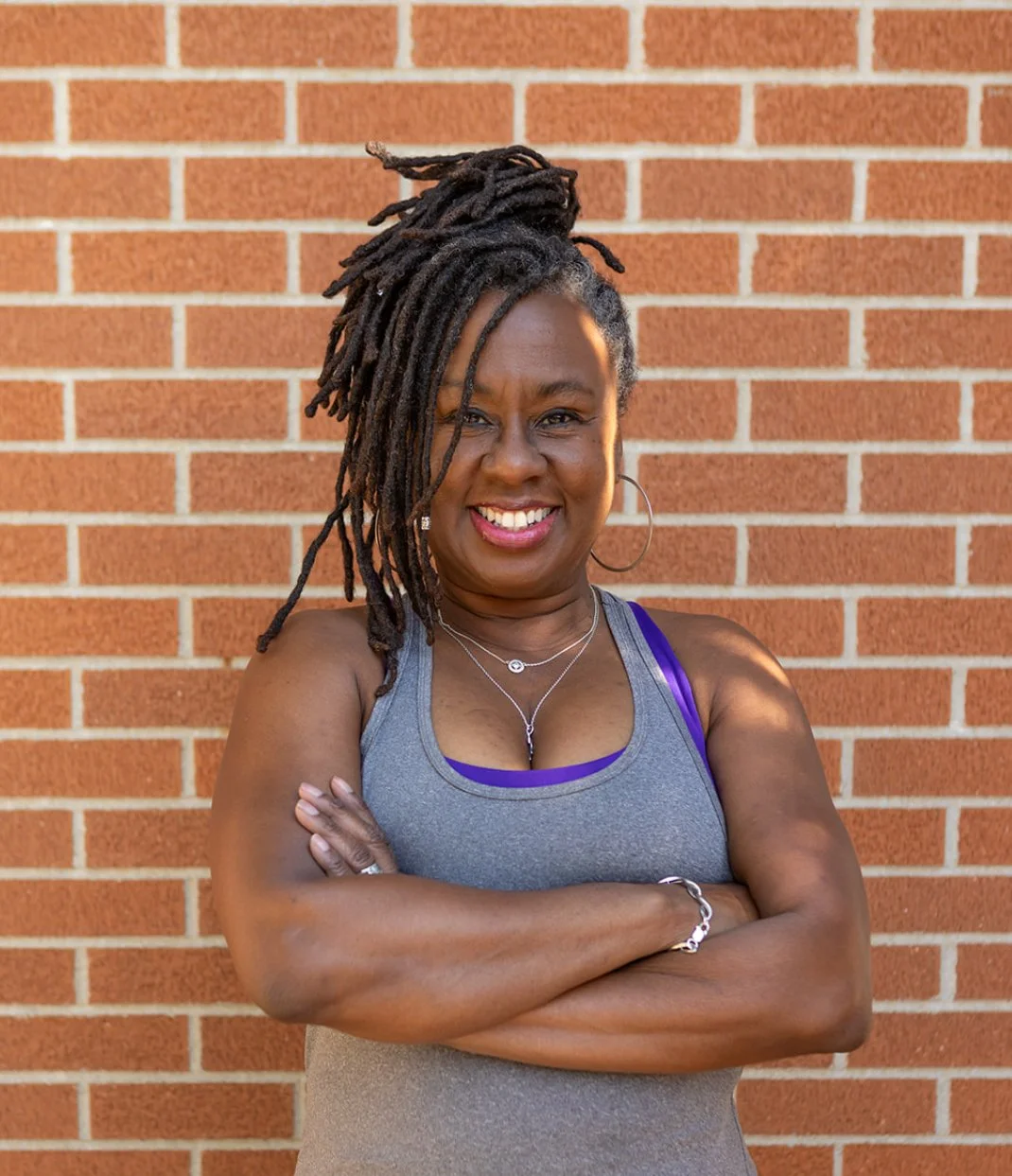
Eboni D. Howell
Eboni D. Howell is a Licensed Professional Counselor (LPC), Certified Clinical Trauma Professional (CCTP-II) and a Licensed Holistic Therapist based in Verona, Pennsylvania. As a co-founder of Agape Wellness Centre, she and her husband integrate holistic and evidence-based approaches to support individuals and couples navigating trauma, depression, anxiety, and relationship challenges. Eboni provides a range of services including yoga, sound healing, meditation, and pastoral care (Rev. T. Charles Howell IV), reflecting their commitment to holistic well-being.
Eboni’s therapeutic practice is enriched by her certifications as a Sound Healer, Level I Breathwork Facilitator, Yoga Teacher – 300, and Labyrinth Facilitator. She is also a somatic movement teacher with IGIA Movement for Health. Her work emphasizes the mind-body-spirit connection, offering clients a safe and nurturing space for healing and transformation.
With a deep reverence for the mind-body-spirit connection, she creates nurturing spaces for healing and restoration through her integrative practice.
Rhythms of Rest is a holistic wellness initiative founded by Eboni that weaves together yoga, contemplative practices, and informative workshops to support healing and restoration. Rooted in Christian principles, it offers a sacred space where faith and yoga come together to nurture the mind, body, and spirit. Her offerings facilitate experiences that help individuals reconnect with themselves, restore inner peace, and reimagine self-care. Offerings include breathwork, sound healing, labyrinth walks, and reflective discussions, all aimed at fostering stillness, resilience, and holistic well-being.
This initiative reflects Eboni's commitment to creating nurturing spaces for healing, emphasizing the importance of rest and spiritual alignment in achieving overall wellness.